Case study: Eliminating Contamination Risks in Beverage Mixing Systems
How an application-driven fluid transfer strategy improved hygiene, reliability, and long-term process stability
Project Context
A beverage manufacturer operating multiple mixing lines for syrups, flavor bases, and liquid formulations was experiencing increasing challenges in its mixing and preparation area. The process involved frequent product changes, aggressive cleaning cycles, and strict hygiene requirements, making fluid transfer a critical factor for product quality and operational continuity.
Flexible hoses were used across different stages of the process, including ingredient feeding, blending, dilution, and cleaning. However, the same hose types were often expected to perform under very different chemical and mechanical conditions.
The Challenge
Over time, the customer identified product quality issues linked to hose degradation, particularly in applications involving aggressive products and intensive cleaning regimes.
The main challenges observed were:
-
Material degradation caused by exposure to aggressive ingredients and cleaning agents
-
Risk of product contamination due to internal hose wear and residue release
-
Loss of flexibility and mechanical integrity in dynamic mixing areas
-
Increased maintenance effort and unplanned downtime
-
Difficulty maintaining consistent hygiene standards between production batches
It became clear that hose degradation was directly dependent on the nature of the product being transferred, as well as the chemical intensity of the cleaning process.
Engineering Assessment
A detailed assessment of the mixing system was carried out, focusing on:
-
The chemical nature of each fluid (syrups, flavor concentrates, cleaning media)
-
Mechanical conditions near mixers, pumps, and dosing units
-
Temperature ranges during production and cleaning
-
Hygiene and contamination risk points
This analysis revealed that a single, generic hose solution was being used for multiple applications with incompatible requirements, increasing the risk of degradation and contamination.
The Implemented Solution
A process-driven fluid transfer strategy was implemented, selecting hose materials according to the specific demands of each application:
-
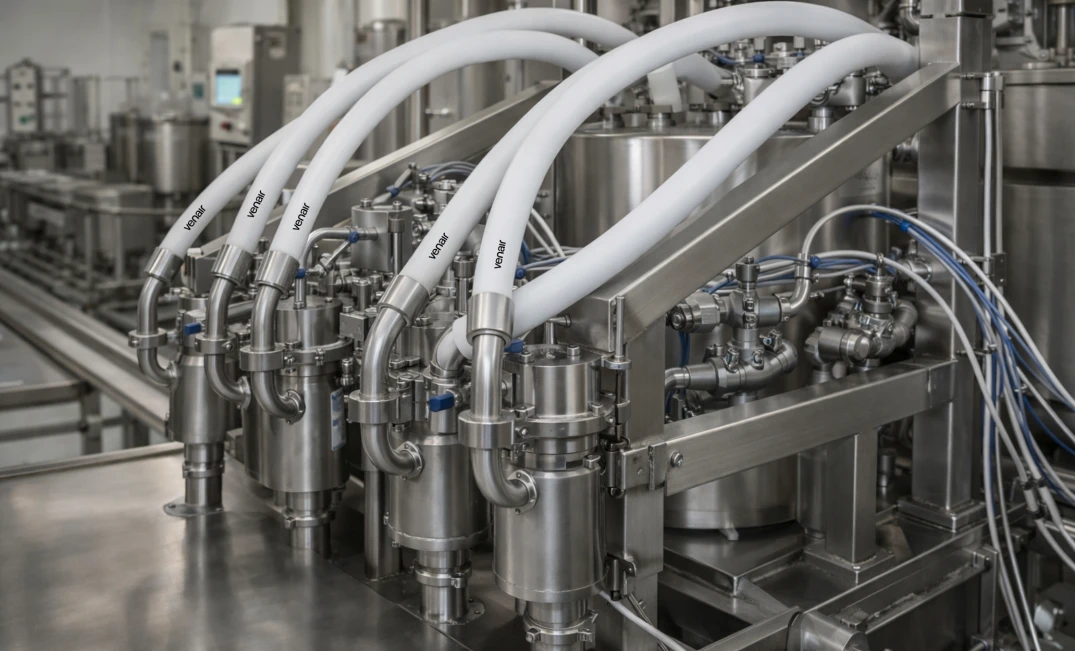
Food-grade elastomer hoses for standard syrup, milk, and fruit-based product transfer
-
Reinforced silicone hoses in areas exposed to movement and vibration
-
Chemically inert fluoropolymer-lined hoses for aggressive products and flavor concentrates
-
Dedicated hose solutions for cleaning and sterilization operations
All hoses were supplied as certified assemblies with sanitary connections, ensuring full compatibility with existing equipment and simplifying installation and maintenance.
Results Achieved
Following implementation, the customer reported significant improvements:
-
Complete elimination of product contamination incidents related to hose degradation.
-
Stable and predictable hose performance, even in aggressive applications.
-
Improved hygiene control and cleaning validation.
-
Reduced downtime and maintenance intervention.
-
Increased confidence in product quality and process reliability.
Since adopting this solution, the customer has continued operating under the same fluid transfer configuration, without recurrence of the previous issues.
Value Delivered
This success case demonstrates that fluid transfer reliability is a key factor in beverage mixing performance.
By matching hose technology to product aggressiveness and cleaning requirements, manufacturers can eliminate contamination risks and achieve long-term operational stability.
Venair’s solution-oriented approach combines application expertise, material knowledge, and hygienic design, helping beverage producers to protect product integrity and optimize their mixing processes.