Fluid Transfer Systems in Railway Applications: Safety and EN 45545-2
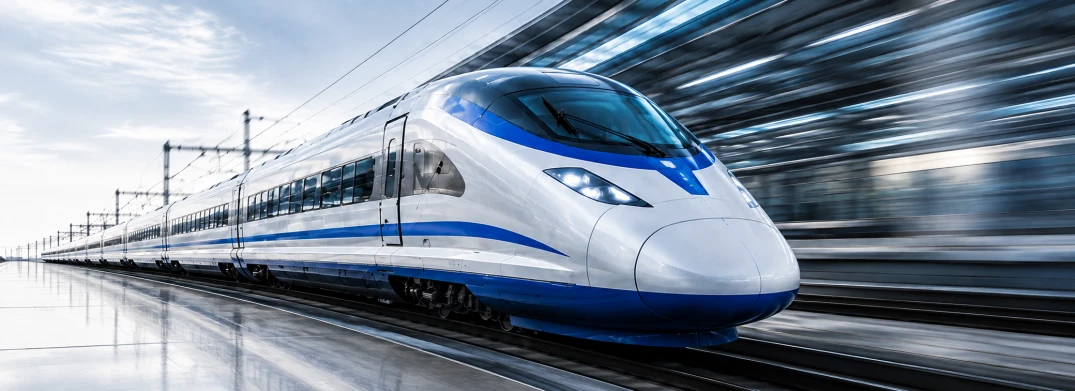
Railway systems operate under demanding conditions where safety, reliability and regulatory compliance are essential. Components must withstand vibration, temperature changes and long service periods while meeting strict fire safety requirements.
In this environment, railway hoses play an important role in transferring fluids and air across different onboard systems. Choosing the right solution means combining mechanical performance with compliance with standards such as EN 45545-2.
Where Are Hoses Used in Railway Systems?
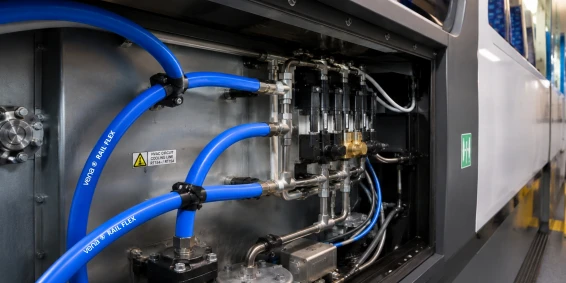
Hose solutions are found throughout rolling stock, supporting applications such as:
-
HVAC and air distribution
-
Cooling of electrical and electronic equipment
-
Pneumatic systems
-
Water and auxiliary fluid transfer
-
Ventilation and hot air ducting
Each application presents different requirements in terms of temperature, flexibility, vibration, pressure and fire resistance.
What Makes Railway Applications So Demanding?
Railway vehicles are constantly exposed to vibration and mechanical movement, making flexibility and long-term durability essential.
Temperature is another key factor. Hoses may operate in cooling circuits, HVAC systems or hot air applications, requiring materials capable of maintaining their properties under changing thermal conditions.
But one of the main challenges is fire safety. Materials installed in railway vehicles must meet specific requirements designed to reduce flame propagation, smoke and toxic emissions.
EN 45545-2: What Does It Mean for Railway Hoses?
EN 45545-2 defines fire behavior requirements for materials and components used in railway vehicles.
For hoses, classifications such as R22 and R23 may apply depending on where the component is installed. The standard also establishes three Hazard Levels—HL1, HL2 and HL3—according to the vehicle's operating and design conditions.
Therefore, specifying an EN 45545 hose requires checking that its classification matches the requirements of the specific application.
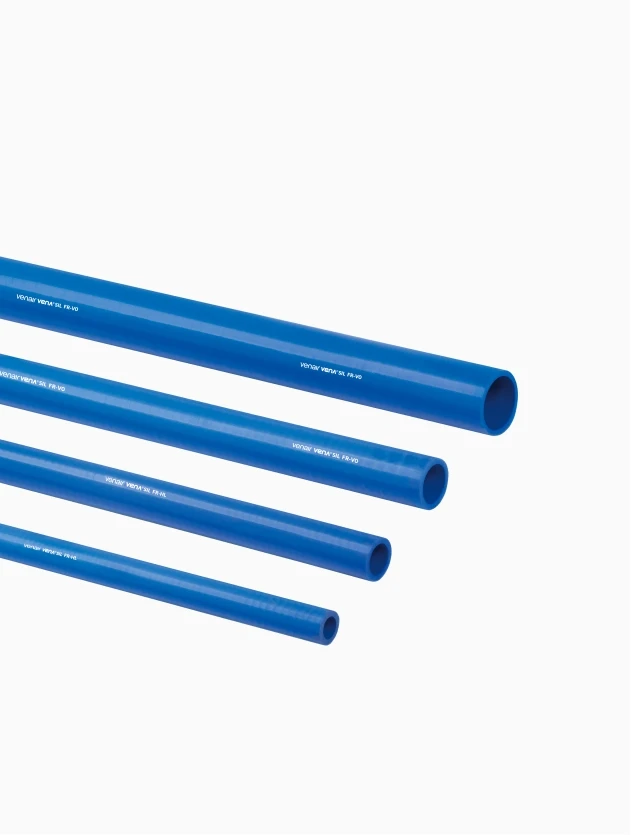
For example, Vena® Rail is designed for railway applications requiring fire-resistant hose solutions and is available with classifications including EN 45545-2 HL3 R23 and HL2 R22.
 |
What Should You Look for in a Railway Hose?
Beyond certification, a reliable railway hose should combine several key properties:
-
Fire resistance according to the applicable railway requirements
-
Flexibility for installation in limited spaces
-
Resistance to vibration and mechanical fatigue
-
Thermal stability across the required operating range
-
Fluid compatibility for cooling and auxiliary circuits
-
Long service life to reduce maintenance and replacements
The right combination will depend on the fluid, operating temperature, installation area and applicable safety requirements.
Safety and Performance Go Together
Choosing the right hose for a railway system is not only about meeting a standard. The solution must also perform reliably throughout the vehicle's operating life.
By combining appropriate materials, mechanical performance and EN 45545-2 compliance, railway manufacturers and system integrators can improve system reliability while meeting the demanding safety requirements of modern rolling stock.
Ultimately, the right railway hose is the one that matches both the technical requirements of the application and the specific regulatory requirements of its installation.