Case Study: Reducing Condensation Risks in Biopharma TCU Cleanrooms
Background
A leading global Biopharma company, operating GMP manufacturing facilities for high-value biologics, relies on Temperature Control Units (TCUs) to regulate the temperature of jacketed process equipment used in critical production steps.
These TCUs circulate chilled water or water–glycol mixtures, typically between 4 °C and 8 °C, to maintain stable and controlled process conditions. While the TCUs themselves were fully validated and performed reliably, the company identified an opportunity to improve cleanroom robustness by focusing on the flexible connections linking the TCUs to the process equipment.
This success case reflects a real application described in the Biopharma TCU brochure, demonstrating how a targeted improvement at the connection level delivered measurable operational benefits.
The application
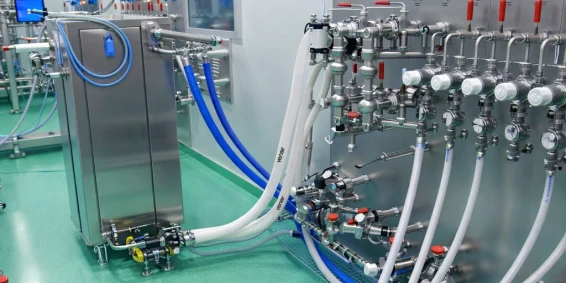
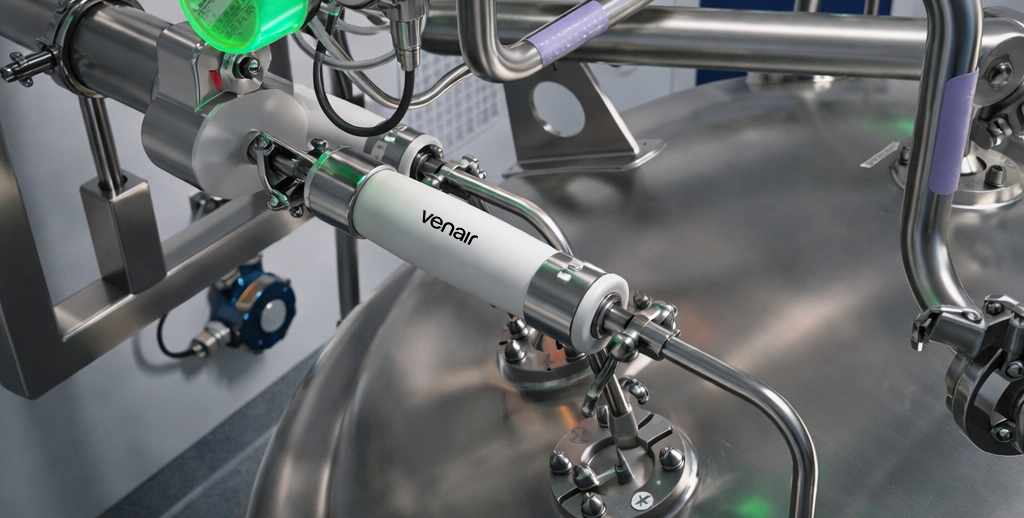
The application involved flexible hose connections between TCUs and single-use mixers and jacketed vessels inside GMP cleanrooms. These hose assemblies were part of daily operations and were subject to:
- High-humidity cleanroom conditions
- Frequent connection and disconnection
- Flexible routing, including suspended or overhead layouts
- Strict hygiene and safety requirements
Although often considered a secondary component, these connections formed the direct interface between the utility system and the production environment.
The challenge
During routine operation, production and quality teams observed consistent condensation forming on the external surface of the flexible hoses whenever chilled fluid circulated through the system.
This resulted in:
- Water droplets forming on hose surfaces
- Dripping onto cleanroom floors and nearby equipment
- Localised wet areas around TCU connection points
- Increased corrective cleaning activities
- Safety concerns related to slippery surfaces
- Increased attention from Quality Assurance regarding moisture control
Although temperature control performance remained within specification, the condensation issue reduced cleanroom reliability and increased operational oversight.
Root cause analysis
A technical assessment confirmed that the issue was not related to the TCUs or the thermal fluid itself. The root cause was identified as the interaction between:
- Low surface temperatures generated by chilled fluids
- High ambient humidity inherent to cleanroom environments
- Flexible hoses not designed to manage condensation
Standard industrial hoses met pressure and compatibility requirements, but lacked:
- Effective thermal insulation
- Anti-condensation surface behaviour
- Optimisation for cleanroom routing and repeated handling
As a result, the hose connections became the most vulnerable element of the thermal control loop.
The solution implemented
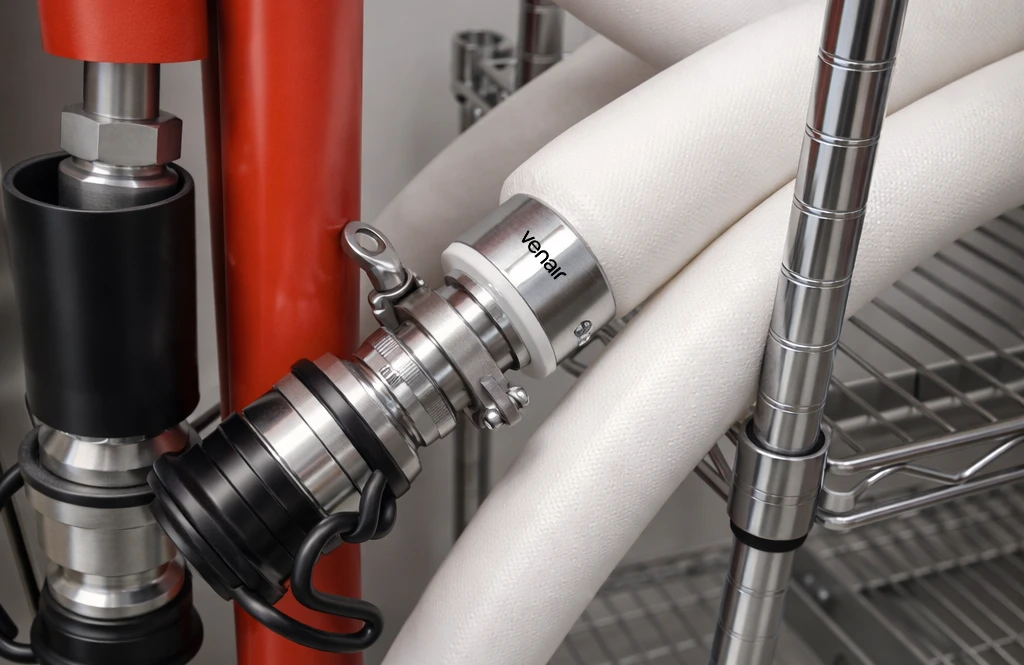
To address the issue, the Biopharma manufacturer implemented VENA® TELCRA® INSULATION COVER, a solution specifically designed for TCU applications operating in high-humidity cleanroom environments.
The solution focused on improving cleanroom compatibility and operational control through:
- Integrated thermal insulation, limiting surface temperature differentials and preventing condensation
- Anti-condensation outer layer, suitable for sustained high-humidity environments
- Lightweight construction, supporting suspended or mobile installations
- High flexibility, facilitating repeated handling and connections
- Pre-assembled hose assemblies, supplied ready to install
- Compatibility with standard Biopharma connection interfaces
Installation practices were also optimised to ensure correct routing and to avoid continuous contact between hoses, preserving long-term anti-condensation performance.
Results and operational impact
Following implementation, the company reported clear improvements:
- Elimination of visible condensation on hose surfaces
- Reduction in unplanned cleanroom cleaning activities
- Improved safety conditions within GMP areas
- Increased confidence from Production and Quality teams
- More stable and predictable daily operation around TCU connections
Importantly, these improvements were achieved without modifying the TCUs or the core process equipment.
Conclusion
This success case demonstrates that in Biopharma cleanroom environments, TCU performance cannot be assessed in isolation. The reliability of the system depends equally on how the thermal control loop interfaces with the surrounding environment.
By implementing VENA® TELCRA INSULATION COVER as part of the TCU connection system, specifically engineered for low-temperature, high-humidity applications, the Biopharma company transformed a recurring condensation issue into a controlled, GMP-aligned operation—proving that optimising the connection system can significantly enhance cleanroom reliability.