
Articles

5 Key Challenges in Data Center Liquid Cooling and How to Address Them

6 min read

The rapid expansion of artificial intelligence (AI), high-performance computing (HPC), and increasing power-dense IT infrastructure is placing unprecedented demands on data center thermal management systems. As rack power densities continue to increase, efficient and reliable heat dissipation has become a critical requirement for maintaining operational performance, equipment reliability, and energy efficiency.

Liquid cooling technologies provide an effective approach to managing high thermal loads by utilizing the superior volumetric heat capacity of liquids compared with air. However, the overall performance and reliability of these systems depend not only on cooling equipment but also on the design and integrity of the entire coolant distribution network.

Factors such as performance, material compatibility, installation constraints, and connection reliability must be carefully evaluated to ensure long-term system functionality.

This article examines five key engineering challenges in data center liquid cooling and explains how specialized fluid transfer solutions can help address them.

1. Managing Increasing Thermal Loads and Coolant Flow Requirements

As processor power consumption and rack-level heat generation increases, liquid cooling infrastructures must accommodate greater thermal loads while maintaining stable coolant flow rates and operating temperatures.

In primary liquid cooling circuits, which transfer heat between facility cooling infrastructure and Coolant Distribution Units (CDUs), hose diameter, pressure rating, and hydraulic characteristics are essential design considerations. Inadequate component sizing can result in excessive pressure losses, increased energy pumping requirements, and reduced system efficiency.

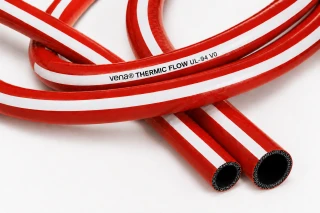
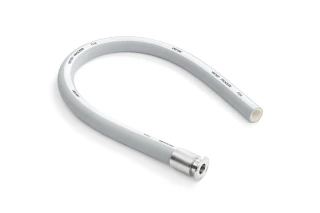
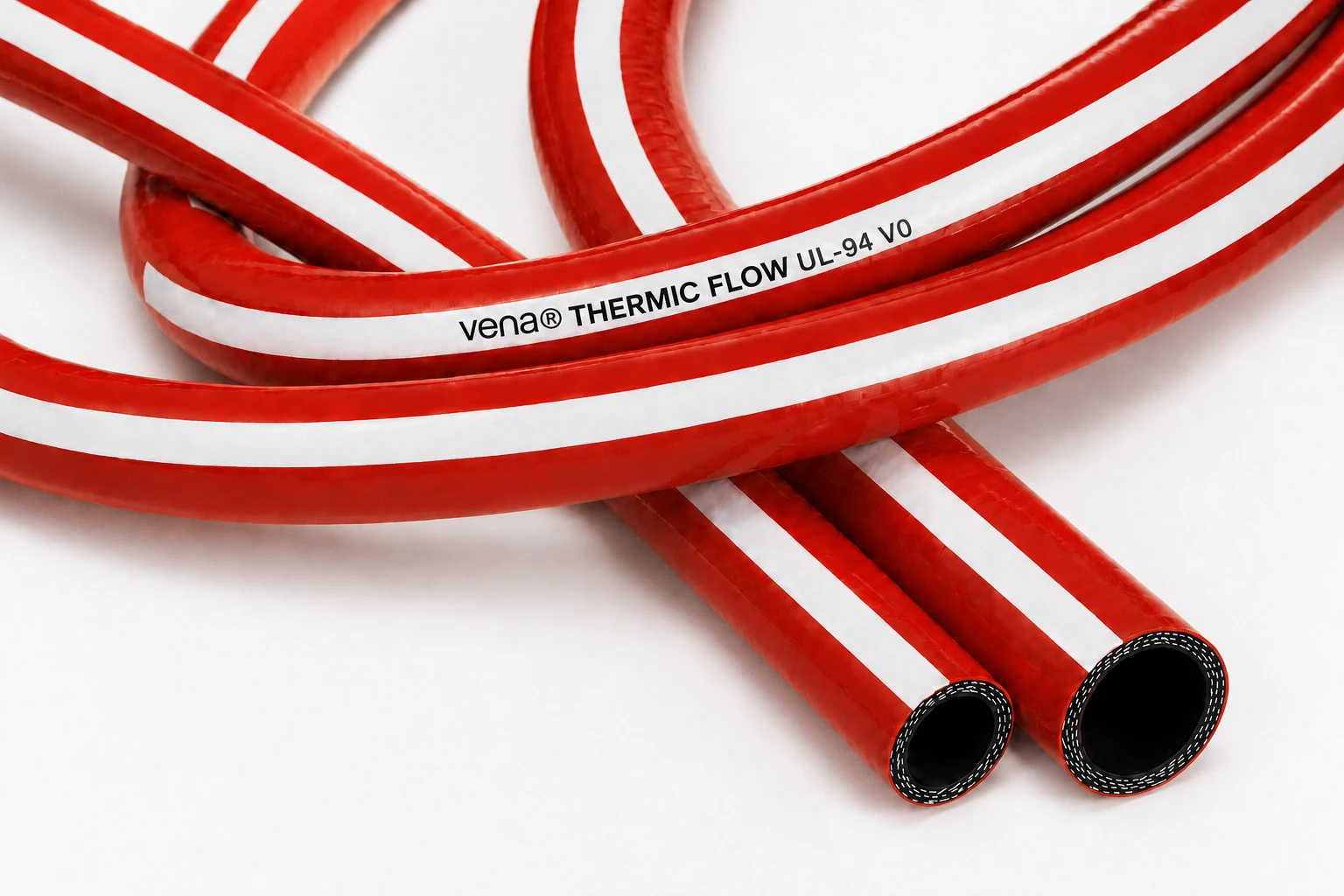
VENA® THERMIC FLOW is engineered for primary cooling circuits requiring higher coolant flow capacities. Its reinforced EPDM construction and availability in larger internal diameters support efficient fluid distribution under demanding operating conditions.

The combination of mechanical reinforcement and installation flexibility facilitates integration into data center cooling infrastructures while allowing engineers to optimize fluid transfer connections according to system-specific hydraulic requirements.

2. Optimizing Hose Routing in Space-Constrained Installations

Modern data centers incorporate increasingly compact cooling architectures, where available installation space is limited by densely populated server racks, piping networks, and auxiliary equipment.

Under these conditions, flexible connections must accommodate complex routing geometries without excessive deformation, flow restriction, or mechanical stress. Tight bending radii can contribute to localized pressure losses, hose kinking, and additional loading on connection points.

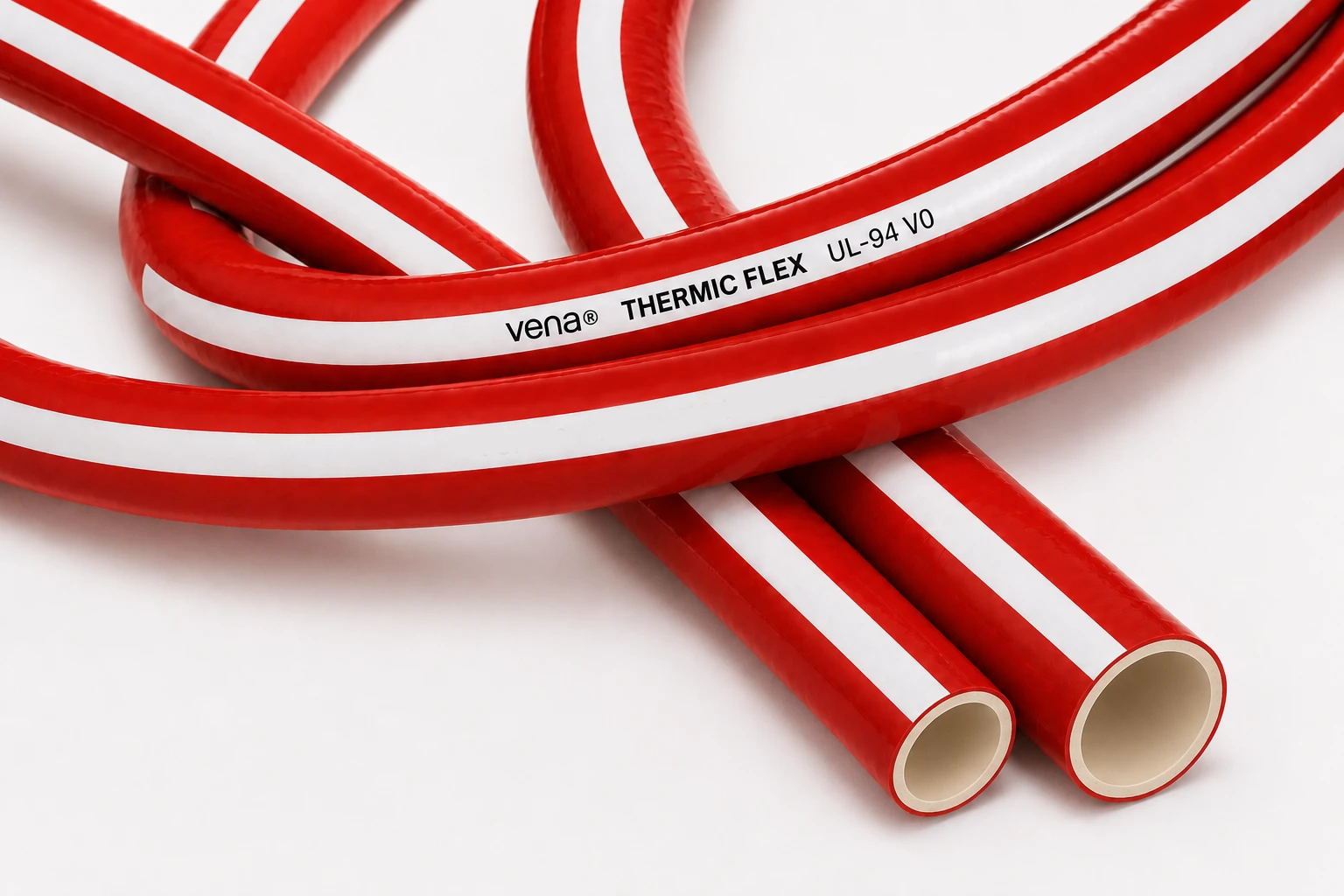
VENA® THERMIC FLEX is specifically developed for secondary liquid cooling circuits where installation flexibility and compact routing are critical.

Its silicone-based construction combines textile reinforcement with an encapsulated metallic wire, providing enhanced flexibility and resistance to hose collapse under appropriate operating conditions.

This configuration supports installation in restricted spaces while helping maintain hose cross-sectional integrity and consistent coolant circulation within the specified operating limits.

3. Ensuring Long-Term Compatibility with Cooling Fluids

Liquid cooling systems utilize different heat transfer fluids, including treated water and water-glycol mixtures, depending on operating temperatures, system architecture, and application-specific requirements.

Selecting materials that are incompatible with the circulating coolant can result in chemical degradation, swelling, changes in mechanical properties, or reduced component service life. Long-term compatibility must also account for operating temperature, coolant concentration, additive packages, and exposure duration.

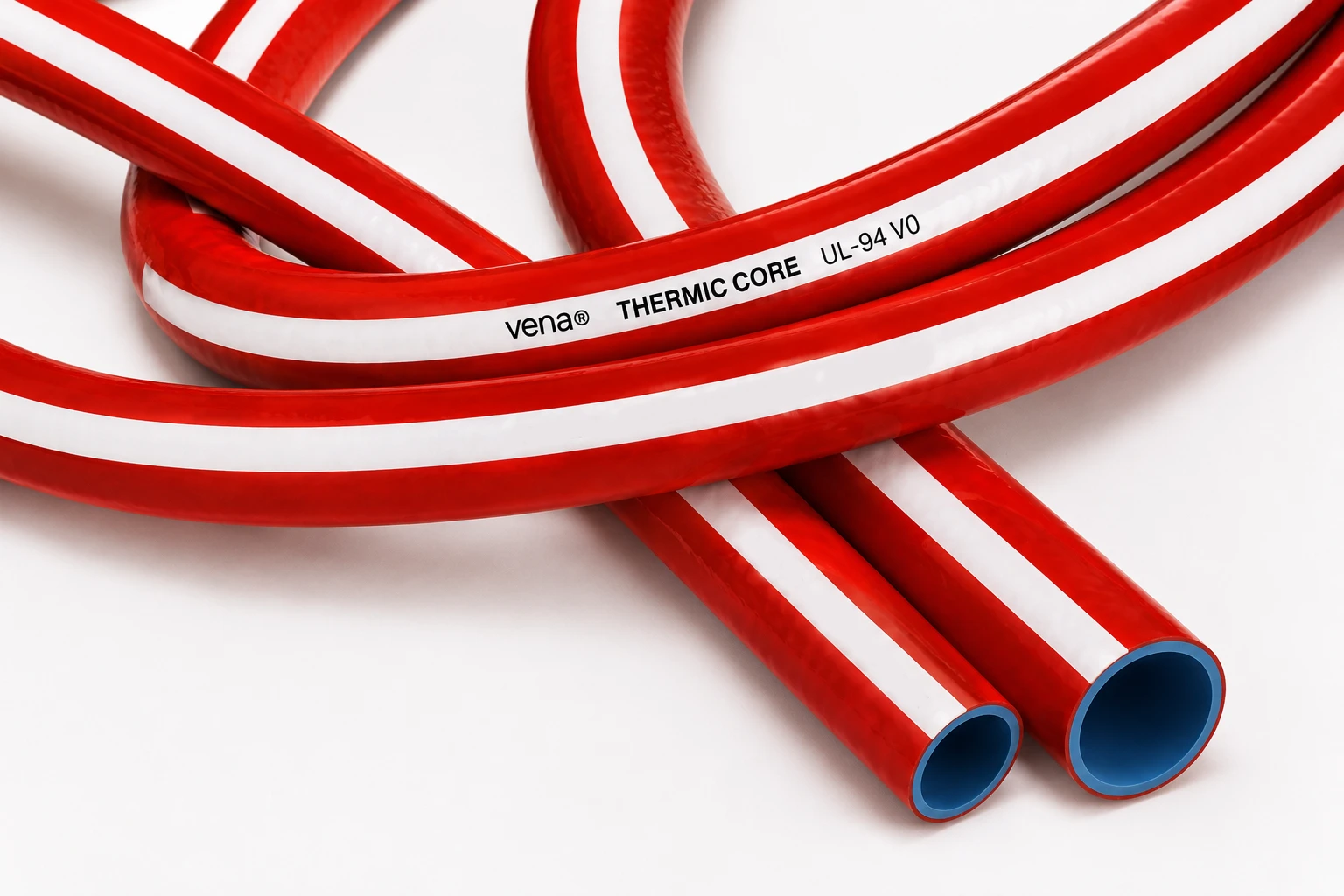
VENA® THERMIC CORE incorporates a reinforced EPDM-based hybrid elastomer construction developed for fluid transfer applications in secondary cooling circuits.

Its material configuration is designed to provide mechanical durability and resistance to thermal cycling when operating with suitable coolant formulations.

By combining reinforced construction with application-specific material selection, VENA® THERMIC CORE supports reliable coolant distribution in data center cooling systems operating under continuous thermal and mechanical demands.

4. Maintaining Operational Safety and System Reliability

In liquid-cooled data centers, fluid transfer components frequently operate in proximity to sensitive electronic equipment. Consequently, minimizing leakage risks, maintaining mechanical integrity, and selecting materials with appropriate fire-performance characteristics are essential considerations.

Hose assemblies must be evaluated according to their operating pressure, temperature range, mechanical loading, connection design, and applicable material flammability requirements.

Venair Solution: VENA® THERMIC Range

The VENA® THERMIC product portfolio incorporates materials with a UL 94 V-0 flammability classification, supporting applications where defined flame-retardancy performance is required.

UL 94 V-0 is a standardized vertical burning classification used to evaluate the flammability behavior of polymeric materials under specified test conditions.

Combined with appropriate hose construction, connection selection, and installation practices, these material characteristics contribute to the development of cooling assemblies designed to meet demanding operational and safety requirements.

5. Developing Scalable Cooling Infrastructure with Integrated Fluid Transfer Solutions

As data center infrastructure evolves to accommodate higher rack power densities, increasing computational capacity, and changing equipment configurations, liquid cooling systems must offer scalability, modularity, and installation flexibility.

The design of coolant distribution networks must account for variations in flow demand, operating temperatures, pressure requirements, and connection configurations while facilitating future system modifications and capacity expansions.

Venair Solution: An Integrated Liquid Cooling Portfolio

The VENA® THERMIC range provides complementary fluid transfer solutions for both primary and secondary cooling circuits.

With VENA® THERMIC FLOW, CORE, and FLEX, engineers can select hose configurations according to application-specific requirements, including hydraulic performance, coolant compatibility, thermal operating conditions, mechanical reinforcement, and routing constraints.

This product portfolio enables the integration of flexible connections across different sections of the liquid cooling infrastructure.


Integrated Connection Systems

To complement the VENA® THERMIC range, Venair offers connection components designed for the technical requirements of liquid-cooled data centers.

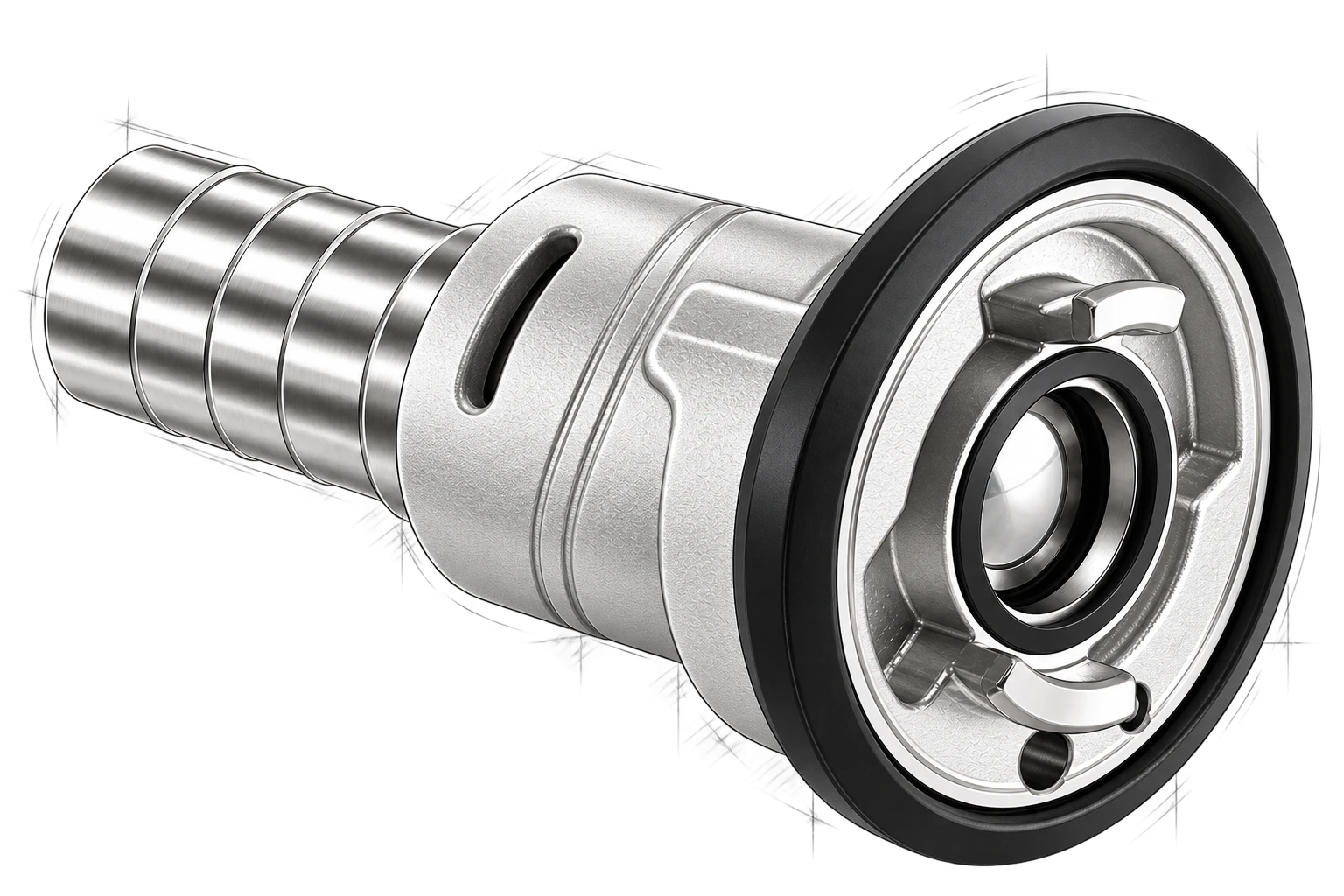
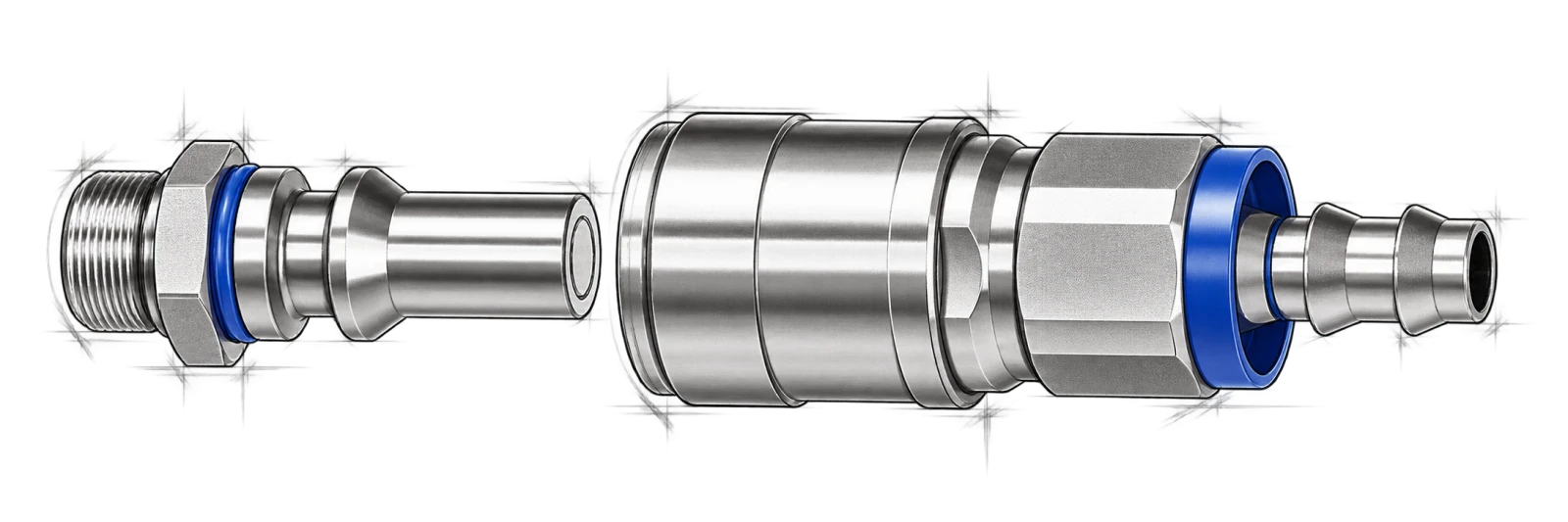
These include Universal Quick Disconnect (UQD) connectors and interlock ball valves, available in standard sizes and suitable configurations.

UQD connectors facilitate modular connections and disconnections, while interlock ball valves provide controlled fluid isolation and can help reduce the risk of unintended disconnection when appropriately integrated into the system.

The combination of flexible hoses and compatible connection components supports efficient assembly, maintenance accessibility, and integration into different cooling architectures.

For detailed technical specifications and available configurations, please refer to Venair's Electric & Electronics Systems Catalogue.


Customized Manifold Assemblies for Direct-to-Chip Liquid Cooling

Direct-to-chip liquid cooling systems commonly incorporate metallic distribution manifolds to supply and collect coolants across multiple cold plates or cooling branches.

These manifolds may require different geometries, dimensions, connection arrangements, and flow distribution configurations according to rack design and system architecture.

Venair offers custom-engineered metallic manifold assemblies integrated with flexible hose connections, manufactured according to application-specific requirements.

These preassembled, ready-to-install solutions can reduce on-site assembly operations, simplify installation procedures, and support consistent integration of fluid transfer components.

By combining customized manifolds with the VENA® THERMIC hose range and compatible connectors, Venair provides integrated fluid transfer assemblies that facilitate the implementation of scalable direct-to-chip cooling infrastructures.

Engineered for the Next Generation of Data Center Liquid Cooling

As liquid cooling becomes increasingly important in high-density data center environments, the reliability and performance of every component within the coolant distribution network must be carefully considered.

From high-flow primary cooling circuits to compact secondary connections and customized distribution assemblies, fluid transfer system design plays a fundamental role in thermal management efficiency, operational reliability, and infrastructure scalability.

Through its VENA® THERMIC FLOW, CORE, and FLEX product range, together with integrated connection systems and customized manifold assemblies, Venair provides engineered fluid transfer solutions for the evolving requirements of modern data center cooling infrastructures.

Contact us to discuss your cooling architecture, evaluate material and connection options, and identify the most suitable VENA® THERMIC solution for your application.

Let's engineer your next liquid cooling solution together.

Related products

Related

All